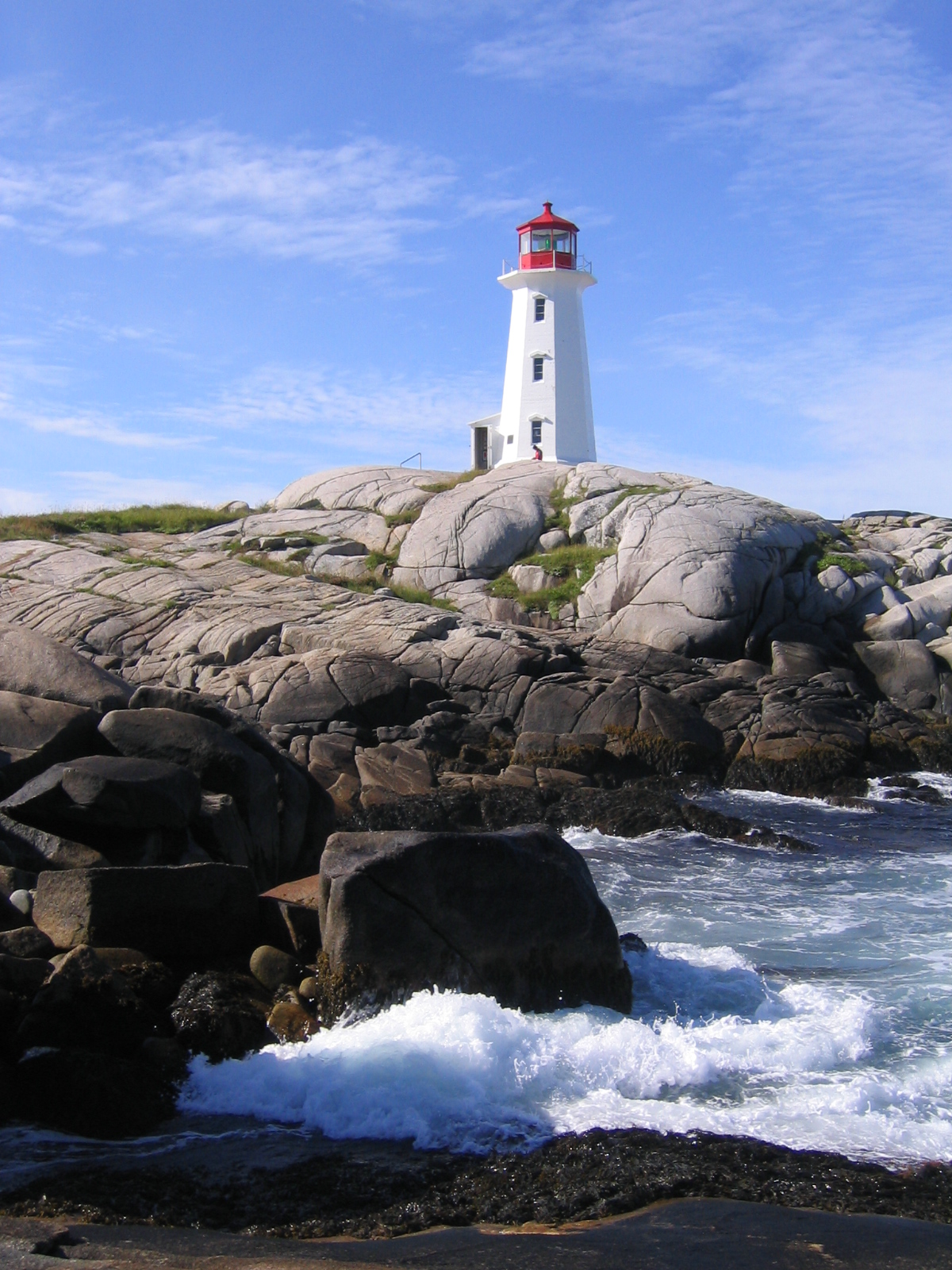
Between Confederation in 1867 and the widespread adoption of automated light systems in the 1960s and 1970s, Canada maintained a network of staffed lighthouse stations along its Atlantic coastline that at its peak numbered several hundred individual postings. The keepers who occupied these stations — and in many cases their families — ran what were effectively small, isolated government outposts responsible for the maintenance of a critical piece of navigation infrastructure.
The stations varied considerably in their conditions. Headland lights on mainland sites like Peggy's Cove in Nova Scotia or Cape Forchu in Yarmouth County were remote but accessible by road or track. Island stations, by contrast, required supply by boat and could be cut off for weeks during winter ice or prolonged storms. Some keepers spent years at a single posting; others were transferred frequently through the Department of Marine and Fisheries' posting system.
The Federal Lighthouse System After 1867
Before Confederation, lighthouse administration was divided among the colonial governments of Nova Scotia, New Brunswick, Prince Edward Island, and the Province of Canada. Post-Confederation, the federal Department of Marine and Fisheries assumed responsibility for all navigational aids, including lighthouses, fog signals, and later, buoy systems. The department's annual reports, published from 1868 onward and now available through Library and Archives Canada, provide systematic records of station locations, keeper names, and the maintenance work conducted each year.
The department's inspection regime sent district superintendents to visit each station at least once annually, producing written reports that covered the condition of the tower, dwelling, and outbuildings, as well as assessments of the keeper's competence and conduct. These inspection records constitute one of the more consistent documentary series available for reconstructing life at individual stations over time.
Keeper Appointments and the Political Dimension
Lighthouse keeper positions were federal patronage appointments for much of the late nineteenth century. Members of Parliament played an active role in recommending candidates to the Minister of Marine and Fisheries, and appointment letters in the Library and Archives Canada holdings routinely cite the applicant's political connections alongside any relevant maritime experience. This system did not necessarily produce incompetent keepers — many appointees had genuine experience with boats and coastal conditions — but it meant that tenure was subject to changes in government, and some keepers were replaced after electoral reversals regardless of their performance.
The patronage character of appointments began to diminish after the Civil Service Amendment Act of 1908, which introduced competitive examination requirements for some categories of federal employment. Lighthouse keepers were brought more fully under merit-based hiring criteria through subsequent amendments, though informal political considerations persisted in practice for some time.
Daily Work at a Lighthouse Station

A keeper's primary obligation was to ensure that the light was exhibited from sunset to sunrise every night without exception. This required maintaining the lamp and its mechanism — early Argand lamps with reflectors were later replaced by Fresnel lenses, which concentrated light into a horizontal beam of far greater range. Fresnel lenses required careful cleaning of the glass prisms and precise adjustment of the lamp position; the department's instructions specified cleaning schedules and lamp-trimming procedures in detail.
Beyond the light itself, keepers maintained fog signals — initially bells or guns, later steam-powered horns and eventually compressed-air diaphragm horns — which required their own fuel supplies, machinery maintenance, and watchkeeping schedules during periods of reduced visibility. At stations with a fog signal, the workload during a prolonged autumn fog could be continuous for days.
"The keeper's log entry for the week of November 14, 1894, at Seal Island reads simply: 'Fog signal in operation 96 hours. Light maintained. Provisions running low.'"
Keepers were also expected to render assistance to vessels in distress within their capability, maintain records of all vessels observed passing the station, and report any unusual conditions to the district superintendent. These observation logs, where they survive, provide incidental records of maritime traffic and weather conditions that are useful to researchers working on adjacent questions.
The Conditions of Isolated Postings
The department acknowledged in its own correspondence that some postings were genuinely difficult. Island stations without boat access during winter months could leave keepers without supplies or medical attention for extended periods. The department's records contain accounts of keepers who died at their stations during particularly severe winters, and of others who petitioned unsuccessfully for transfer after years of isolation had affected their families' health.
Keeper families — wives and children lived at most stations as a matter of course — took on significant portions of the work, particularly when the keeper was ill or incapacitated. Women who kept lights during a husband's absence or illness were occasionally noted in inspection reports, but rarely received formal recognition or pay. Several women applied for appointment as keepers in their own right following a husband's death, and some were successful, though the practice was not consistent across districts or periods.
Automation and the End of the Staffed Station
The federal government began systematically automating lighthouse stations in the 1950s, using electric light systems with automatic switching mechanisms that eliminated the need for continuous on-site attendance. The process accelerated through the 1960s and was largely complete for Atlantic Canada by the mid-1970s, though a small number of staffed stations remained operational into the 1990s.
Automation resolved the department's difficulty in recruiting keepers for the most isolated postings and reduced the cost of maintaining the system, but it also removed the social presence that staffed stations had provided in some areas. At stations near fishing grounds, the keeper had served as a point of communication, emergency contact, and local knowledge about conditions — functions that automated lights could not replicate.
Heritage Designations and Surviving Structures
The Heritage Lighthouse Protection Act, passed by the federal Parliament in 2008, established a process through which lighthouse structures could be designated as heritage buildings and protected from demolition or unsympathetic alteration. The Act was driven in part by concern that automated lights were being demolished or allowed to deteriorate once they were no longer required for active navigation.
As of 2026, several dozen Atlantic Canadian lighthouses have received heritage designation under the Act or under provincial heritage legislation. Peggy's Cove Light Station in Nova Scotia, Panmure Island Lighthouse in PEI, and Cape Bear Lighthouse in PEI are among those with active preservation programs. The Parks Canada agency manages a number of lighthouse sites as components of national historic sites.
The physical structures that remain are the most legible part of the lighthouse system's history. The keeper logs, inspection reports, and appointment correspondence that constitute its documentary record require more deliberate effort to access, but are considerably richer as evidence of what the system actually involved.
Last updated: April 28, 2026
