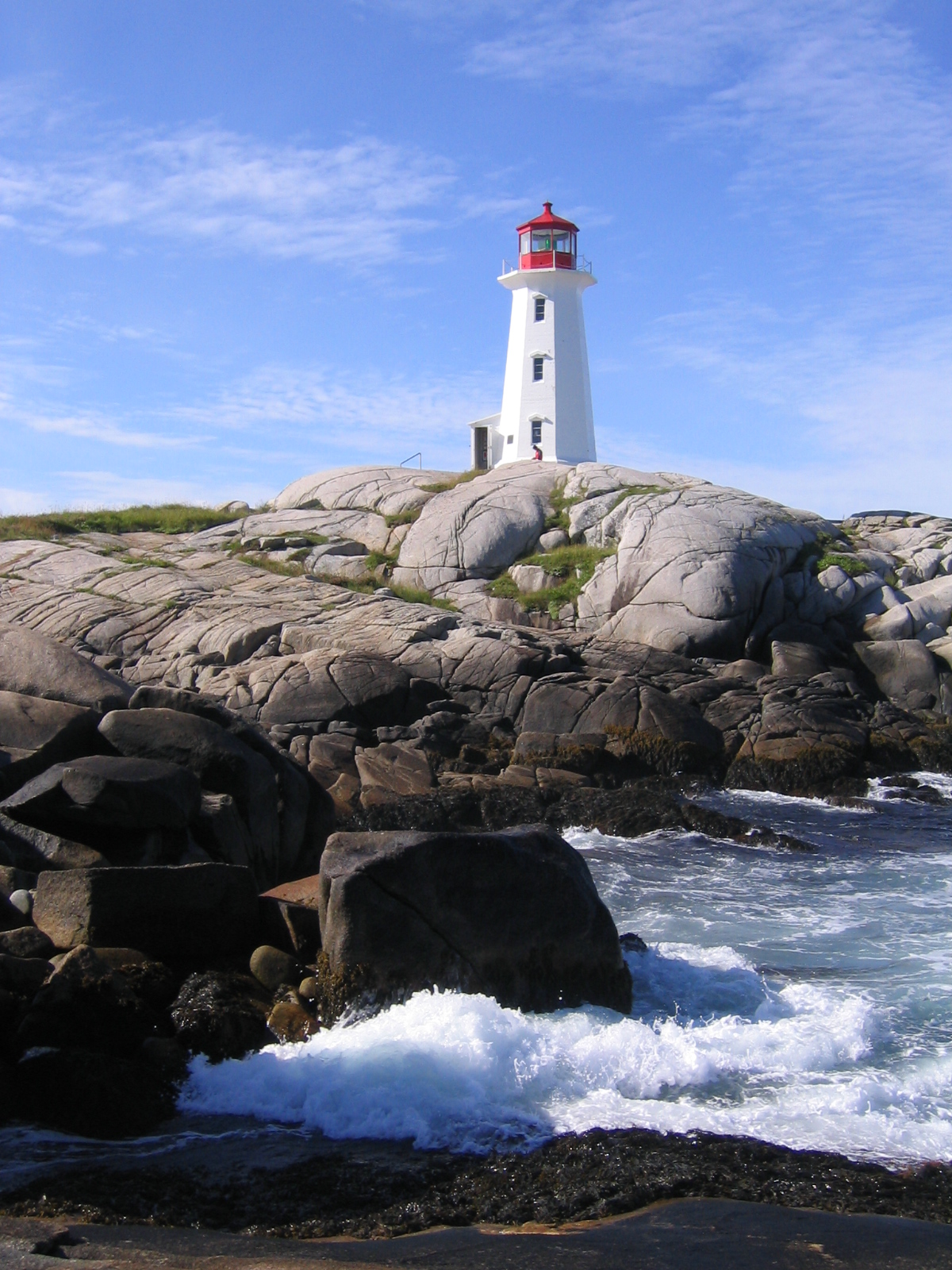
Lunenburg sits on Nova Scotia's South Shore, roughly 90 kilometres southwest of Halifax. Its founding in 1753 under the British settlement programme brought several thousand Protestant settlers, mostly from German-speaking territories, to a site previously used by Mi'kmaq and Acadian fishermen. Within a generation, those settlers had reorganized the town's economy around the sea. By the early nineteenth century, Lunenburg's fishing operations were supplying dried and salted cod to Caribbean and South American markets at a scale that made the town one of the most productive fishing ports in British North America.
The Bank Fishery and Its Organizational Basis
The expansion from inshore dory fishing to the offshore Grand Banks fishery took place incrementally between roughly 1800 and 1870. Lunenburg merchants financed schooners and provisioned crews on a share basis — a labour arrangement that distributed risk between vessel owners and fishermen without the fixed-wage structure common in industrial settings. Under the share system, crew members received a proportion of the vessel's catch earnings after deducting costs for salt, bait, and provisions. This arrangement made it easier to recruit in years of high catch rates and put the burden of poor seasons directly onto the crews.
The schooners operating out of Lunenburg by the 1880s ranged between 60 and 120 tons and carried crews of 20 to 30 men, each working from a small dory launched from the main vessel. Fishing was conducted with hand lines and, later, trawl lines set along the bottom. Days began before dawn and extended until after dark during the peak summer season. Ice was carried in the hold from Halifax to keep the catch fresh during the passage home.
"The men who fished the Banks from Lunenburg were not adventurers in any romantic sense. They were operating a production system under difficult conditions, and they understood its economics with considerable precision."
The Bluenose and the Limits of Symbolism

The Bluenose, launched at Smith & Rhuland's Lunenburg yard in 1921, became the most recognizable vessel associated with the town and, through its place on the Canadian dime, a national image. Its record in the International Fishermen's Trophy — undefeated through 1938 — gave it a symbolic presence that outlasted its working life. The vessel was sold in 1942 and wrecked off Haiti in 1946 while carrying freight.
The Bluenose's racing success was real, but its narrative weight has sometimes obscured the more structurally significant developments taking place in the fishery during the same decades. The 1920s and 1930s saw the introduction of motor-powered vessels, which reduced dependence on wind and shortened turnaround times between Lunenburg and the Banks. This transition required capital investment that concentrated ownership in fewer hands and gradually eroded the share system's more dispersed structure.
Consolidation and the Postwar Fishery
The Second World War disrupted Atlantic fishing through U-boat activity, fuel restrictions, and the diversion of labour to military service. The postwar period brought federal investment in harbour infrastructure and vessel modernization. Lunenburg's fish-processing plants, particularly those operated by National Sea Products (later renamed FPI), expanded significantly during the 1950s and 1960s. Processing employment drew workers from the declining dory fishery into factory work, reshaping Lunenburg's social geography.
The offshore draggers that replaced the schooner fleet in the 1950s were considerably more efficient at harvesting groundfish. That efficiency, combined with the expansion of fleets from European nations working the same stocks, produced mounting pressure on cod, haddock, and pollock populations through the 1960s and 1970s. Scientific assessments showing stock decline were available to Canadian and international fisheries managers from the early 1970s onward, but quota reductions sufficient to allow stock recovery were repeatedly delayed under pressure from industry and fishing communities.
The 1992 Moratorium and Its Consequences
The federal moratorium on northern cod fishing, announced in July 1992, applied primarily to the northern stocks centred on Newfoundland, but its economic logic extended to the broader Atlantic groundfish fishery. Subsequent quota reductions through the 1990s reduced the scale of Lunenburg's offshore fleet to a fraction of its peak capacity. National Sea Products' Lunenburg plant, which had employed over 1,000 workers during peak years, reduced its workforce substantially and eventually closed its fish-processing operations in the town.
The closure sequence was not uniform. Some vessels shifted to shrimp, crab, and lobster, which were less affected by the groundfish collapse and had expanding markets. Lunenburg retained a working fishing industry through the early 2000s, but at reduced scale and with a different species mix than had characterized the town's economy for two centuries.
What Remains
Lunenburg was designated a UNESCO World Heritage Site in 1995, with the designation covering its historic downtown as a surviving example of British colonial urban planning. The heritage designation has sustained tourism and protected the physical fabric of the town, but it describes a built form whose economic basis has largely disappeared.
The Fisheries Museum of the Atlantic, operated by the Nova Scotia Museum system, maintains the most accessible archive of the Lunenburg fishery's material history, including dory-building equipment, vessel records, and oral history collections from former fishermen and processing workers. The museum's collections represent one of the more complete documentary records of a regional fishing economy in Canada.
The story of the Lunenburg fisheries is not straightforwardly a story of decline. It is a record of a particular set of arrangements — between labour, capital, marine ecology, and export markets — that proved workable for a long time and then ceased to function when the ecological baseline they depended on was removed. The rebuilt Bluenose II, moored as a heritage vessel at the Lunenburg waterfront, marks that history without entirely explaining it.
Last updated: April 28, 2026